Sunday, July 25, 2010

"MBA in a Nutshell" - Terms You Need To Know


Well, for non-Management people this would be something really strange so i would suggest you have Wikipedia open in your system (http://www.wikipedia.org/ ) for any kind of reference. That being said please let me know if any terms or Abbreviations are not clear so that i can give an explanation on the respective topic. For Management Students or People who have already done their MBA/PGPM/PGDBM this is like a walk through on what you would have come across during that stage so i suggest you grab a Pop Corn and just have a read and refresh those concepts. So here goes my list on the terms you would need to know.


SWOT, Porters Five Force, BCG Matrix, Synergy, Force Field Analysis, Management by Objectives, SMART, Porters Diamond Analysis, Decision Tree, Industry Analysis, Maslows Heirarchy, Marketing Mix, 4Ps, PDCA, Balance Sheet, Profit & Loss, Kaizen Approach, Moore’s Law, PESTEL, Benchmarking, Cascading, Delegation, Goals, Elliot Wave theory,, Work Life Balance, Short & Long Period Advance Decline Line, Book Keeping, Liquidity, Markowitz Model, Relative Strenght Index, Stochastics Method, Line Balancing, CPM, PERT, ERP, Pareto Analysis, Johari Window, Product Mix, Trade Cycle, Business Cycle, Recession, Depression, CAGR, Recovery, Boom, Bullish & Bearish Markets, Ethics, Organizational Structure, Philanthropy, CSR, Mission & Vision, Security Analysis, Prime Cost, Work Cost, EOQ, EBQ, Inventory Cost, Merchandise Assortment, Quantitative Analysis, Probablity Distribution, Hypergeometric, Regression, Forecasting, Procurement, Logistics, IRR, NPV, Profitability Index, Literature Review, Median, Inter Quartile Range, KPO, BPO, Attitude, Behaviour, Key Success Factors, EPS, P/E Ratio, WCC, Portfolio Management, Fixed Costs, Variable costs, Overheads, Resource Planning, Brainstorming, Reverse Brainstorming, Six Thinking Hats, Six Sigma, Project Management, Entrepreneurship, Transportation, Linear Programming, Organizational Behaviour, Modiglianni & Miller Theory, Hypothesis, CRM, Supply Chain, OARR, Simulation, Letter of Understanding, Inventory Control, BOM, Game Theory, Assignment, Queuing Models, Gantt Chart, Production Possibility Curve, Macro Economics, Traits, Innovation, Attrition, Retention, Annuities, Bonds, Debt Equity, Liabilities, Assets, BootCamp Training, ROI, ROCE, ROE, Corporate Governance, Change, Product Life Cycle, Mergers & Acquisition, Technology Transfers, Takeovers, Joint Ventures, Communication, Ego, Prototyping, Alpha Beta Gamma Testing, Dupont Analysis, Market Analysis, McKinsey 7S Strategy, Customer Satisfaction, Customer Delight, Front and Back Operation, Forward Integration, Backward Integration, Horizontal and Vertical Integration, Distribution Channel, Carry and Forwarding Agents, Facility Plant Location, Breakeven Analysis, Quality Control, ISO, Debtors, Collection Cycles, Creditors, Demings Principles, Process Layout, Reserves, FOREX, Imports, Exports, Total Quality Management,Quality Assurance, GDP, Inflation, WIP, Sunk Cost, Depreciation, Ledger, Journal Entries, Service Quality, Service Blueprint, Fundamental Analysis, Technical Analysis, Company Analysis, Industry Analysis, Operating Cycle, Dividend, Vnedor, Process costing, Job costing, Capital Budgeting, Discounting, Yield to Time Maturity, Capital & Revenue Expenditure, Lead time, JIT, Buffer Stock, Warehousing, Payback Period, Equity Valuation, Working Capital, Miller Orr Model, Baumol Model, BAT Model, Job Analysis, Job Description, Outsoourcing, Sub-Contracting, Coaching, Training, Recruitment & Selection, Compensation & Benefits, Fiscal Policy, Monetary Policy, ITES, Diversification, Re-Order Level, ABC Analysis, VED Analysis, Control Chart, Material Recruitment Planning, Aggregate Planning, Capacity Planning, Bottle Necks, Master Production Schedule, Enterprise Resource Planning (ERP), Book Value, Market Value, Face Value, Brand Value, Word of Mouth, Advertising, Stocks, BSE & NSE, Securities, Elasticity, Industry Attractiveness, Competencies, Coupon Rate, Monopoly, Oligopoly Market, Demand Pull, Supply Push, Pull-Push Marketing Strategy, Leadership,Motivation, Negotiation, Conflict Resolution, Power & Politics, Career Planning, Questionnaire, Interview Schedule, Contingencies, Succession Planning, Cause & Effect, Fish Bone Analysis, Commodities, Appraisal, Business Model, Primary Market, Industry Size, Growth Rate, Gap Analysis, SMES, Fringe Benefits, APEX Body, Infrastructure, Variance Standard Deviation, Vendor Management, Business Laws, Tax Structure, VAT, CIF, FOB, Leverage, FDI, FII, Promoters, Brokers, ULIP,Blue Ocean Strategy,4As,GDP Deflator, Indifference curves, cost of capital, Cost-benefit analysis, consumer, starbursting, TOWS matrix, KRA, Size-set ratio, 80-20 principle, cognition, dissonance, ERG theory, Victor Vroom's Expectancy model, deflation, spiral effect, due diligence, resilience, breakthrough, efficiency, pipeline, pipe & trench model, scrum, persuasion, Business Intelligence, brand equity, value creation ETC ETC ETC…The list goes on!!

Also please go to this website, this will be of some help:
Courtesy: Suha Niyogi

PS : Please let me know if i have left out anything

Wednesday, June 16, 2010

ZARA lands in India!!


What the industry takes six or nine months to do, Zara does it in 15 days. The brand of clothing and accessories pioneered the term ‘fast, affordable fashion’ in the apparel industry and is the global benchmark in a sector with one of the most complex supply chains. Till now, Indians needed a ticket to Europe, the Americas or South-east Asia to get Zara products. With Zara’s Spanish parent, the euro 11-billion Inditex Group, forming a 51:49 joint venture with Trent, Tata’s retail division, they needn’t venture beyond Delhi and Mumbai.

Of Zara’s 4,700 stores across 77 countries, there now would be three Indian stores. Stores spanning 1,500 square feet will retail apparel under sections such as Zara Woman, TRF, Kids and Man and Basic.

With over a dozen cities comprising over 3 million people, Inditex couldn’t have missed India. According to McKinsey, by 2025 India’s middle class is set to grow to 583 million from about 50 million which is just 5 per cent of the population, making it the fifth-largest consumer market. But Zara has more immediate plans. It expects revenue from Asia and West Asia to account for 20 per cent of its turnover, up from 12 per cent currently.

However, Inditex is being conservative in India, unlike in China where it has no less than 78 Zara stores. “We won’t be present in India with just three stores. Of course, there will be more. But, first we want to be cautious in a humble way. We want to listen to consumers first before going ahead. Getting the right location is also critical because we build awareness through the perception consumers have of our store ambience and our products, rather than advertising,” says Inditex Chief Communication Officer Jesús Echevarría Hernández. Zara would not invest in above-the-line campaigns.

Armed with the knowledge of catering to similar markets elsewhere and a well-oiled team of store managers and liaison officers who will interact with buyers, Zara is confident of feeling the pulse of the Indian consumer. By listening to consumers at each store, Zara’s team would relay the preferences to its 250-strong central design team in Spain. The team would act on it (making changes or reiterations based on feedback) for a new set of designs. It aims to bring in two new trends to fill up aisles twice per week, in line with its global model.

“We will bring several lines in small batches to cater to different tastes. But whatever consumers see in the stores they can trust it to be fashion,” says Hernández. Batches will comprise 15-20 pieces of each trend per store. Zara’s signature lies in creating designs that are inspired by trends set by fashion weeks around the world (where top designers showcase their works), movies, high-street and information from its consumers, which are then made affordable by its lean and fast supply chain. Designers brainstorm on marrying fashion and price, while a computer optimises the prototype to eliminate fabric wastage. Sewing cooperatives which get the prototypes for reproduction churn out products in less than a week. The distribution centre receives around 2.6 million items tagged according to countries and individual stores but needs to hold them for less than a few hours before they move out. Items are trucked to Europe’s stores in a day and flown to off-shore markets in 48 hours.

Yet it is this very model of affordable fast fashion that might be behind Inditex’s cautious tread. Banking on an import model, it would have to absorb high import duties, making Zara’s merchandise expensive. The price range would be Rs 990 to Rs 8,990,which should appeal to the upper-middle class.

Perhaps the biggest challenge would be India’s slow adoption of non-ethnic and casual clothing. The ethnicwear market for women is almost three times larger than westernwear market. And, on the whole, women’s apparel market is smaller than men’s apparel in India. The difference in the Indian market has made it tough for international labels to carve a foothold. Retailers such as Marks & Spencer have tried to localise production to avoid import duties and bring down prices and customise better, while a few other retailers packed up during the downturn due to poor volumes.

Yet Zara’s business model could also be the trump card. Trends show that even India’s leading designers are replicating its lead times to make the most of demand for fashion in modern retail. Tying up with chains such as Westside, designers now unveil their collections to match the current season, rather than follow top-rung international designers who have a six-nine months’ lead time. With more malls and high-streets opening up, Zara could have a go at establishing itself as a non-ethnic lead brand if it can listen well.

Source : Business Standard

Monday, June 7, 2010

Avenue with a Difference!!

Express Avenue!!

The new mall which opened last week in Chennai has lots to offer as far as retail is concerned. Spread over 15,00,000 square feet, Express Avenue is South India's largest lifestyle Shopping Mall. Entertainment is something EA has a lot to to offer as this is something the average household will look for on a weekend. Some of the features which they are planning to propose is to have for the 1st time in Chennai-Entertainment zone by international formats spread over 70,000 sq. ft., 8 screen multiplex with capacity to entertain 1300 people. Express Avenue is a strategic venture of Express Infrastructure Pvt, Ltd, a 100% subsidiary of Express Newspapers Pvt. Ltd (The reputed Indian Express Group) founded by the Late Mr. Ramnath Goenka. Kavita Singhania, Grand Daughter of Ramnath Goenka is the Managing Director of EA Infrastructure Pvt Ltd.
Now let me go into my review of the mall in person. All in all it looks in great shape, heart of the city, Anna Salai and so many residential areas as well in the nearby surrounding's which will induce them to come to the mall and make a visit once in a while. In the beginning like in any other malls, not many shops have opened and its difficult to actually review the crowd gathering. During my visit yesterday, the crowd was much more than my expectation considering only 'Lifestyle' has opened up its 80,000 Sq Ft outlet which also includes 'Splash' a famous outlet based out of Dubai if i am not wrong. I was really amused with the Entertainment Zone and the Food Court both in the same floor which is a great move by the EA Group. They both always go hand in hand and unlike other malls in the country i felt space was something EA has looked on, everything was very well organised that space did not become an issue at all. Another interesting fact about EA Mall is that it looks similar to the City Center in Bahrain which i guess no one would have thought of. If you look closely the resemblance is mainly with the 2 buildings they have attached to the mall and same is the case with the City Centre in Bahrain where one of the Building is used as a multiplex and the other one as office purpose which is similiar to what they have it here in Express Avenue as well.

All these are not said to criticize of anything of that sort but just giving my personal views on the Mall. I also feel that Chennai is going international and with the kind of progress the city has been witnessing no doubt this will be the most developed city in India in the near future.

Wednesday, June 2, 2010

Importance of Management Education


Management education is all the rage today. Graduates pursuing an MBA from any institution that offers one is common. Many people have criticized that it imparts no additional skill to a person other than making them more acceptable to the market place. It is a known fact that the MBA education scenario in India has been vitiated by profit-seeking individuals out to make a quick buck. However , I feel that the students are also party to not choosing rationally. There is always a choice of pursuing one’s true calling and there are relatively few people in the world who come in to the adult age without any idea what that calling might be. Moreover even if there is no clear choice, there is always the path of education through experience. This ,no course in India or elsewhere can provide. Students everywhere in India and elsewhere see education as a means to get a job. Learning for learning’s sake has it’s own merit which is more often lost. Once we stop to think we might realize that going down the path that have relatively few people may have unforeseen rewards. What i feel is that Management Education should rightly be a practical approach to what one has learned in his/her graduation or the experience the person would have got during the initial stages of one's career. MBA as many say is Applied Common Sense and rightly said as whatever the Management Education provides is what he/she is going to be facing in the future in any corporate firm and the situations are more or less likely to happen which may be simple or complex as well. Management Education apart from leraning the various Management techniques gives importance to Entrepreneurship as well now a days in a country like India as the young citizens of India are looking forward to run their own organizations instead of working for others. This indeed is a great move for a country like India wherein the developing Phase of the country is slowly moving into the next phase of 'Developed'. In Short Management Education is something which can be applied by any one be it Doctors, Lawyers, Engineers etc and this is an essential element for any countries development.

Friday, May 28, 2010

Coupe du Monde


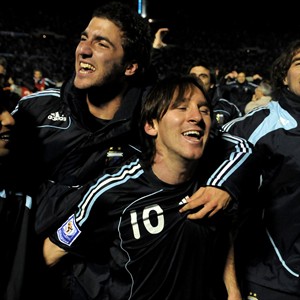
Finally 2010 is here, the year the whole world will witness yet another event which everyone has been waiting for, The Football World Cup a.k.a Coupe Du Monde in South Africa, 1st time in the African continent. My favorite team has always been Argentina no matter the number of times they have lost, the commitment and the style of play can be only seen with this young team. The likes of super talents like Carlos Tevez and Lionel Messi is a big advantage for the Argentine team and i am sure they will not disappoint the crowd. 1978 was when Diego Maradona held the cup for Argentina the last time around and i'm sure the young guns under the same Diego will take the Coupe Du Monde home. The team has had times at which they werent able to pull things right and also had the threat of not even qualifying to the World Cup but it was again Diego who pulled up the socks of the team and getting things right. The true and optimistic attitude of the team will be a booster to the team which adds to my point of the Argentinians taking away the Cup. The World Cup is not just any game, its one of those games which Countries play against each other as in they are in a battle zone and after the 2nd World War we wouldnt have found any teams fighting each other for that prestige and pride. Lets hope the World Cup brings in excitement as in every World Cup's and i hope South Africa will not disappoint with their organizing!!

Adios!!

Wednesday, May 26, 2010

Sakhir Fantasy


Date : 04/04/04 Venue : Sakhir International Circuit...For those who did not quite get what this is, its the day the world renowned sport "Formula1" set foot in the tiny little island in the Middle East 'Bahrain' also known as the Island of Pearls. Lucky me for that matter i happened to visit the extravaganza the year i was leaving that great country after my schooling. The reason i write this blog now is because of the extreme craze i have with this sport and it took me 6 years after the event to start blogging. Along with me was Mohsin Mohammed, my classmate right from childhood and a family friend. The event lasted only for a couple of hours but the excitement and the roar of the 2400CC cars was mind blowing and lucky me i happened to get the seats in the grand stand which was right across the 1st sharp turn wherein all the cars would decelerate from the 7th gear to the 1st and had a view of all the machines without having to turn your heads now and then. The circuit was built in the desert which was later evident with the hot desert breeze running in and around the circuit which further increased the temperature of the drivers with spectacular over takings and fights which finally the legend of all "Michael Schumacher" sprayed the specially made drink as The winner will not celebrate the victory with the traditional champagne, but with a non-alcoholic drink produced especially for the occasion!! All in all it was an awesome day wherein my dreams came true in witnessing an international event.

More on the Bahrain International Circuit : http://en.wikipedia.org/wiki/Bahrain_Grand_Prix

Tuesday, May 25, 2010

Mahabs Trip


It all started when i had this dream of me going to Mahabs which was just a flash back of the trip i was in when i had come to Chennai for a visit from Bahrain where i was then doing my schooling. Got up from sleep realizing it was a dream and i felt really sad about it. Called up my friend who was fast asleep and asked him "U coming to Mahabalipuram??" and to my surprise he was far from being ready to go!! Left off to Mahabs and then went about exploring all the temples which were built almost 13 century's back!! The Shore temple was a retreat to watch which was built by the Pallavas in AD 642. I happened to also see the light house which was built by the Britishers in AD 1900, the structure was very well built that anyone would be surprised to know that this was built almost 110 years back! The temple on top of the mountain even though had proper routes we dint bother to take them, instead took a risky route which we also wanted to get a hold of the trekking part of the game. The trip last for only 5 hours but the exciting part was the thirst at which i wanted to make this trip possible only because of the dream i had seen that morning!! Hope to have similar trips soon!!